You Are Your Own Water Treatment System
So the major concept I want you to keep in your mind is that you are your own water treatment system. The water is coming up from the ground, through pipes, into your house, and if you want any treatment done on that water before it comes out of the spigot into your sink, you need to be doing that treatment.
Sediment Filters
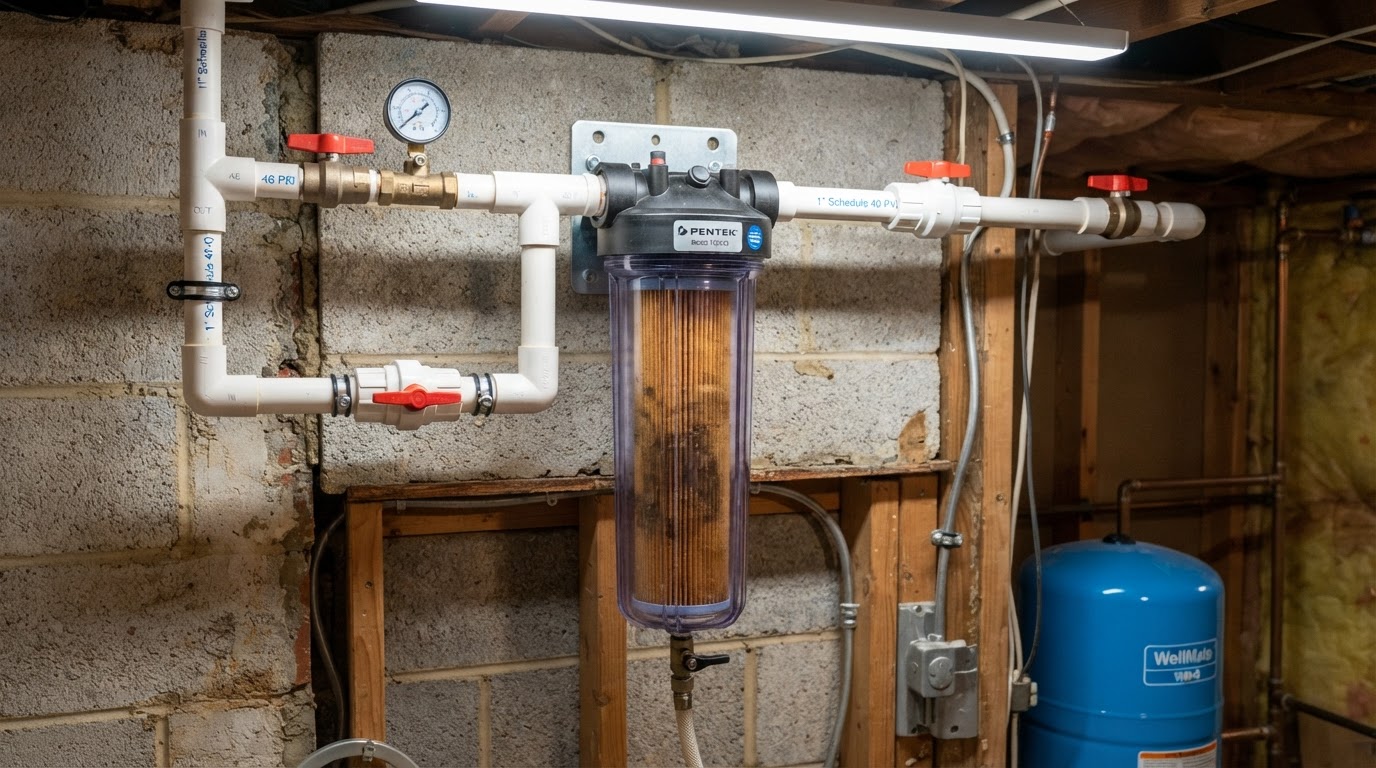
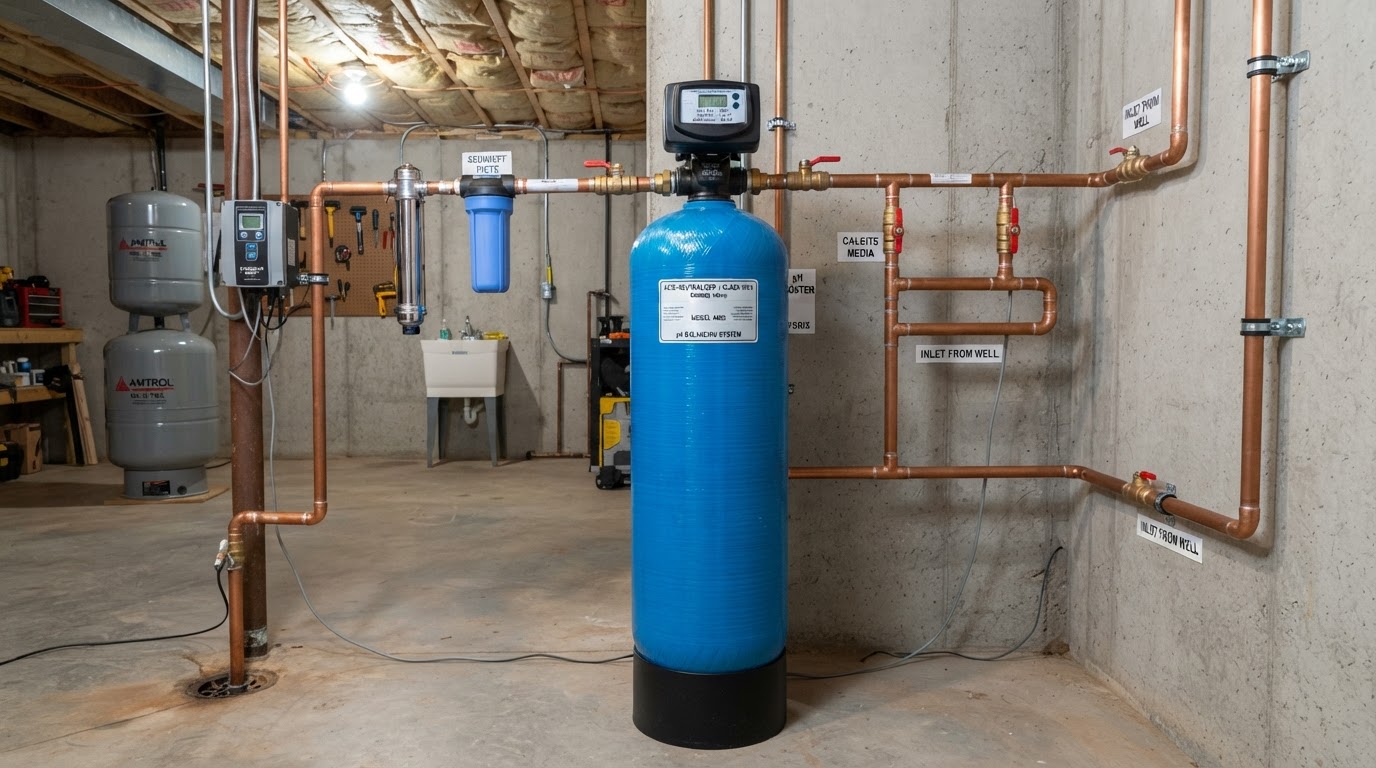
The most common treatment that we see on well systems is a sediment filter. And so if you look up well water sediment filter, you'll get an idea, and it is typically a round filter that you change out every month to every few months.
And it has a little container where all the water that comes in the house flows through this filter, and it catches sediment that might be in the filter. So it's pretty interesting, and it's very effective.
UV Water Treatment
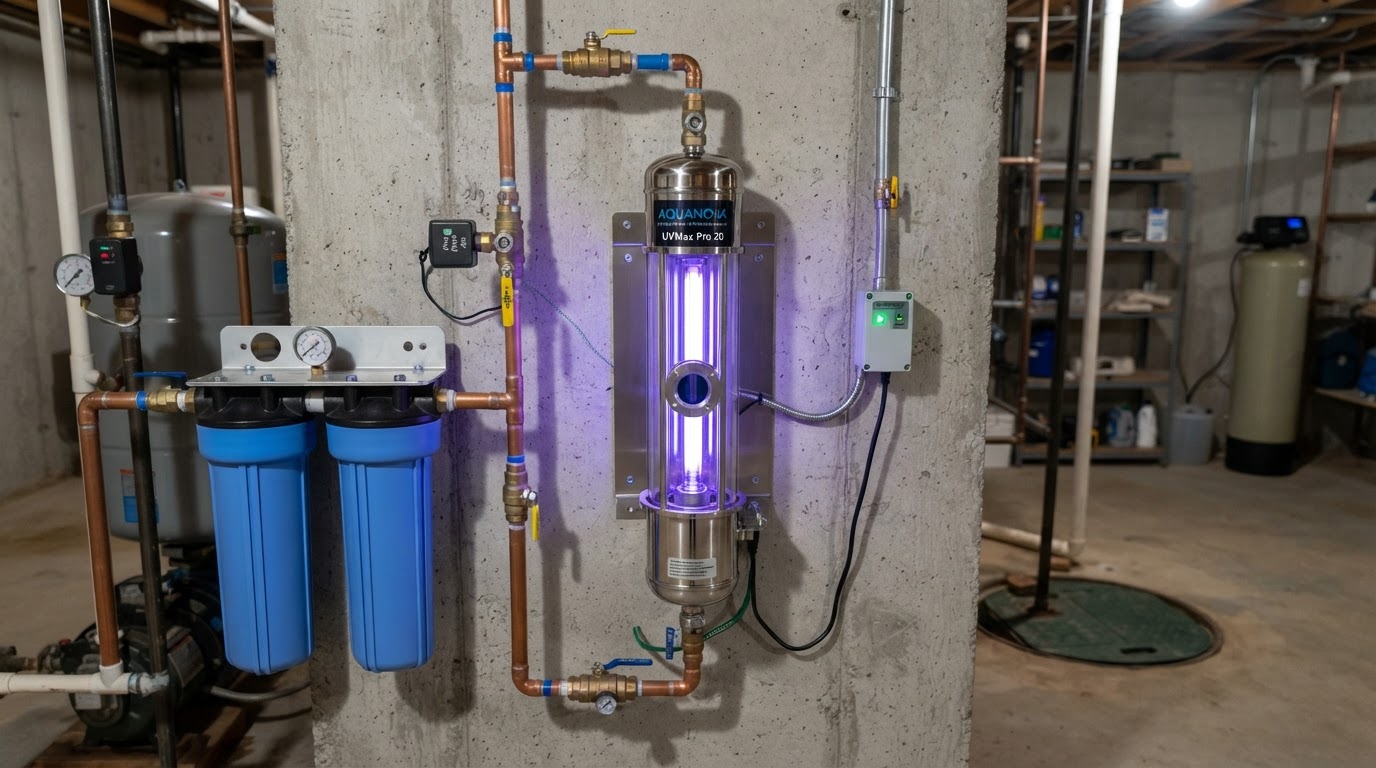
Another less common, but still relatively prevalent system that we see to treat water on wells is a UV system. And that is a UV light system where that light shines on the water as it comes in the house, and it kills any bacteria that would be in that water.
Testing Well Water for Bacteria
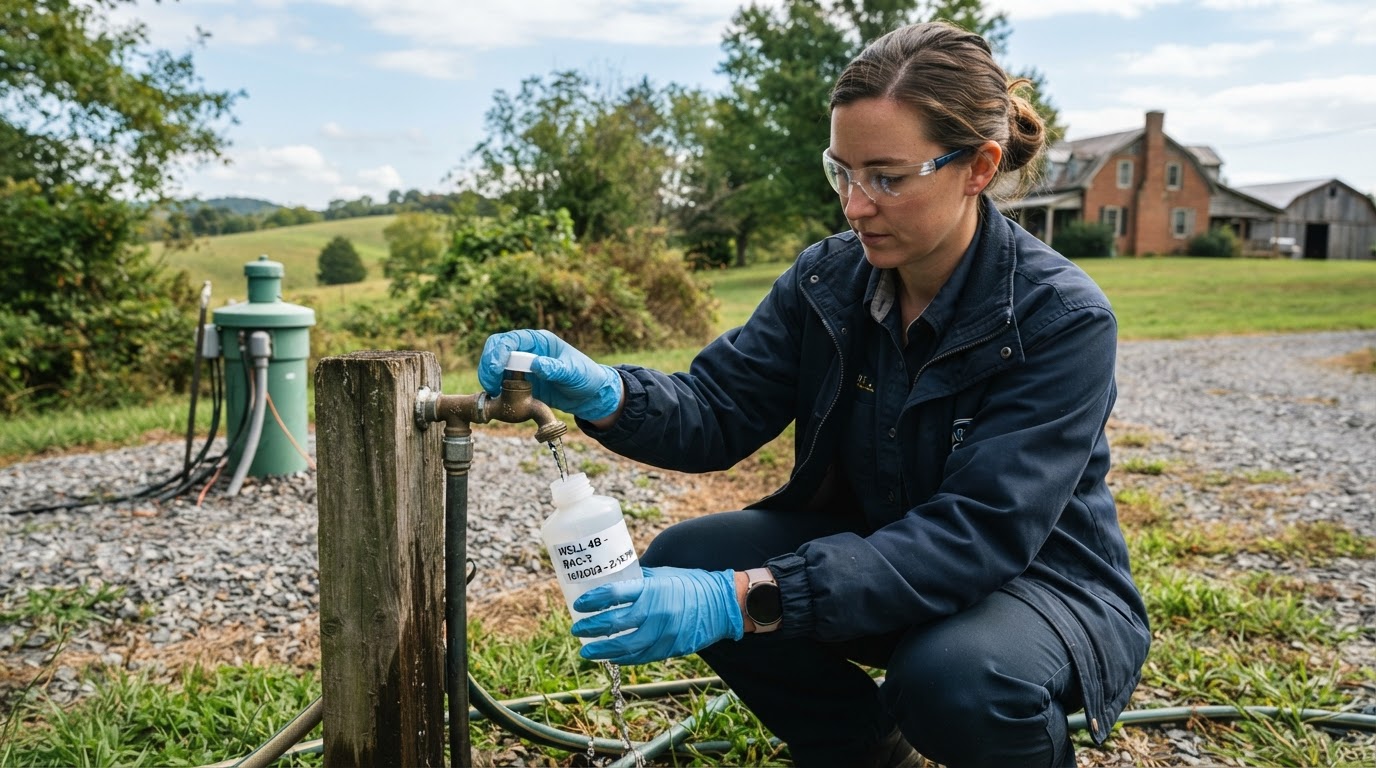
There's always a risk of bacteria getting into well water, and in fact, the powers that be, the authorities, as a big agricultural school, has a lot of information out there about testing your water for bacteria.
And generally, it is recommended that you test your well water for bacteria annually.
And because bacteria is such a big issue, we often see these UV filter systems on well water because it is killing any bacteria that may be in the water before that water comes into your house and you use it.
Related reading: bacteria and E. coli testing in Charlottesville
Maintaining a UV System
Now, if you have a UV system, I would note you always want to make sure it's up and running and that you have backup bulbs for it on hand, because let's say that water has bacteria.
Let's say your UV system breaks, and you can't fix it immediately. Well, that bacteria water comes past the UV system, and that bacteria water is now in the pipes in your house.
That means the pipes in your house now have the bacteria in them, and that means you have to do what we call bleaching or shocking your entire house's piping system to get that bacteria killed and start back at zero, clean again.
So it's a big job. You don't want to have to do it.
And so I recommend always having a backup input available for that UV system so that if it breaks, you can swap out the bulbs right away and never have water coming through into the house untreated from the UV system.
All right, so that's a UV system that can address bacteria issues.
Related reading: well water disinfection in Charlottesville
Acid Neutralizers
There are various other water treatment systems, and another one that's common is an acid neutralizer.
And this is a big tank that you put calcite in, and that neutralizes if your water is coming in acidic.
The reason you would want to do that is if you have copper pipes, acidic water will wear away at those copper pipes over time, and eventually, you could get little pinhole leaks in your pipes.
This would be especially painful if it happens in pipes that are behind walls, because then we're talking about drywall work, all kinds of damage that could happen from a pinhole leak behind a wall.
So if your water is tested and it is acidic, then you should look at getting an acid neutralizer system put in that will neutralize that acidity of the water as it comes in the houses and preserve your copper pipes in the house.
Related reading: well water filtration in Charlottesville
Other Water Treatment Systems
There are other systems people will get put in, like water softeners or things like that, that are a little less common.
But just be aware that if you're looking at a house with well water, or you own a house with well water, there might be other systems that you would want if for whatever reason you're unhappy with your water.
Related reading: water softeners for well water in Charlottesville
Choosing Water Treatment for Your Home
But living on well water, just keep in mind, you are your own water treatment system.
Nearly every house with well water has that sediment filter. You might also want to look at a UV filter for bacteria and an acid neutralizer system if you have copper pipes in your house and you have acidic water, which is something you can test for.
You can even order a test on Amazon and test it yourself to see the acidity of your water.
Related reading: well water testing in Charlottesville