Well Water Testing in Charlottesville, VA
Certified, lab-accurate private well water testing for homes, families, and real estate transactions across Charlottesville and Central Virginia. Detect bacteria, lead, nitrates, pH imbalance, and more, with clear results and honest guidance.
- ✓ Same-week sampling
- ✓ State-certified lab analysis
- ✓ Plain-English results report
Get your free well water testing quote
Tell us about your well, we'll send pricing and the next available appointment.
Required once at construction, recommended every year after
Well water testing in Charlottesville, VA, is required for newly constructed wells. After the initial construction, however, there's no law requiring private well owners to regularly test their well water. But the U.S. Environmental Protection Agency (EPA) recommends testing well water at least once a year to make sure that the water you're drinking is safe and free of contaminants.
On this page, you'll learn the importance of regularly testing your well water, how often to test it, how the test works, what tests to be conducted, what the test results mean, and where to get your well water tested in Charlottesville.
- Why testContaminants build up silently
- How oftenYearly minimum, sooner after events
- How it worksFive steps from sample to results
- What to testColiform, nitrate, pH, TDS & more
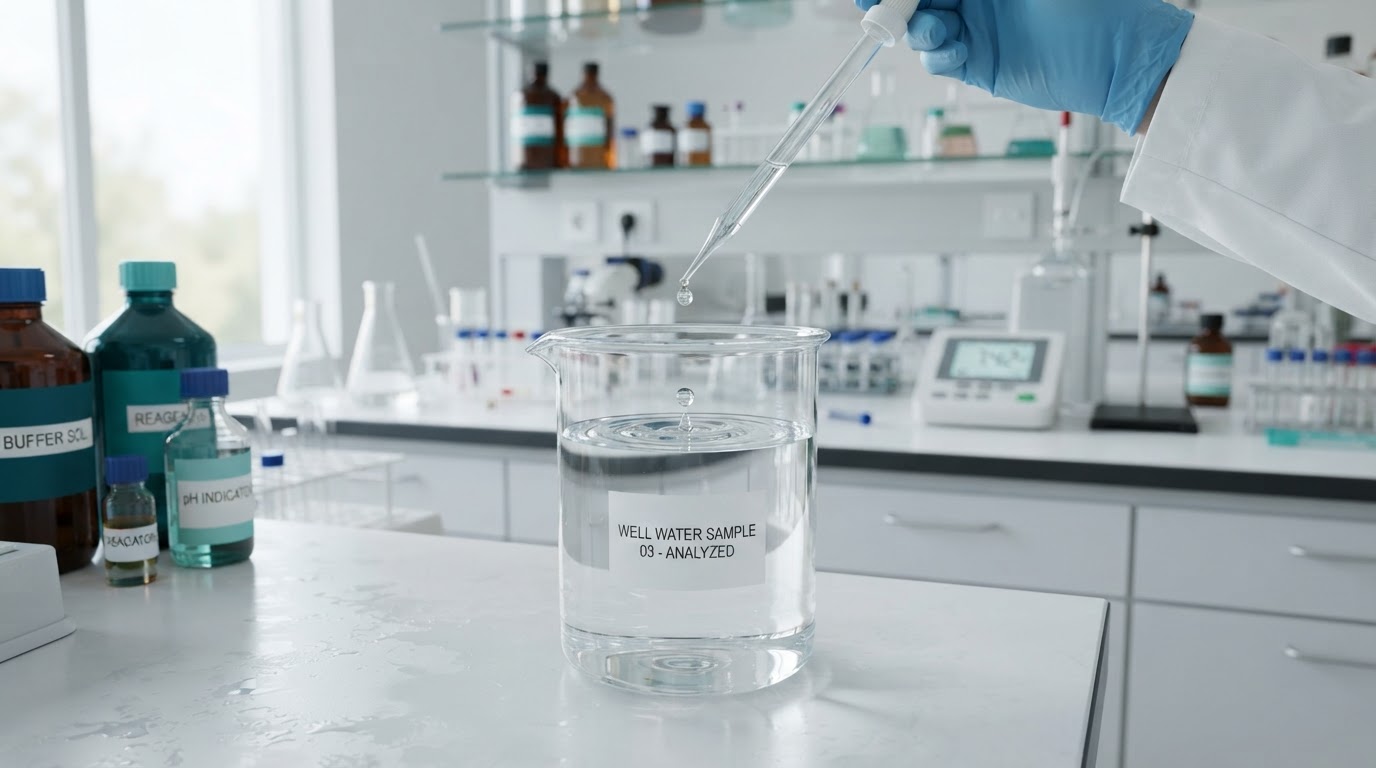
EPA-Recommended
Test your private well every year
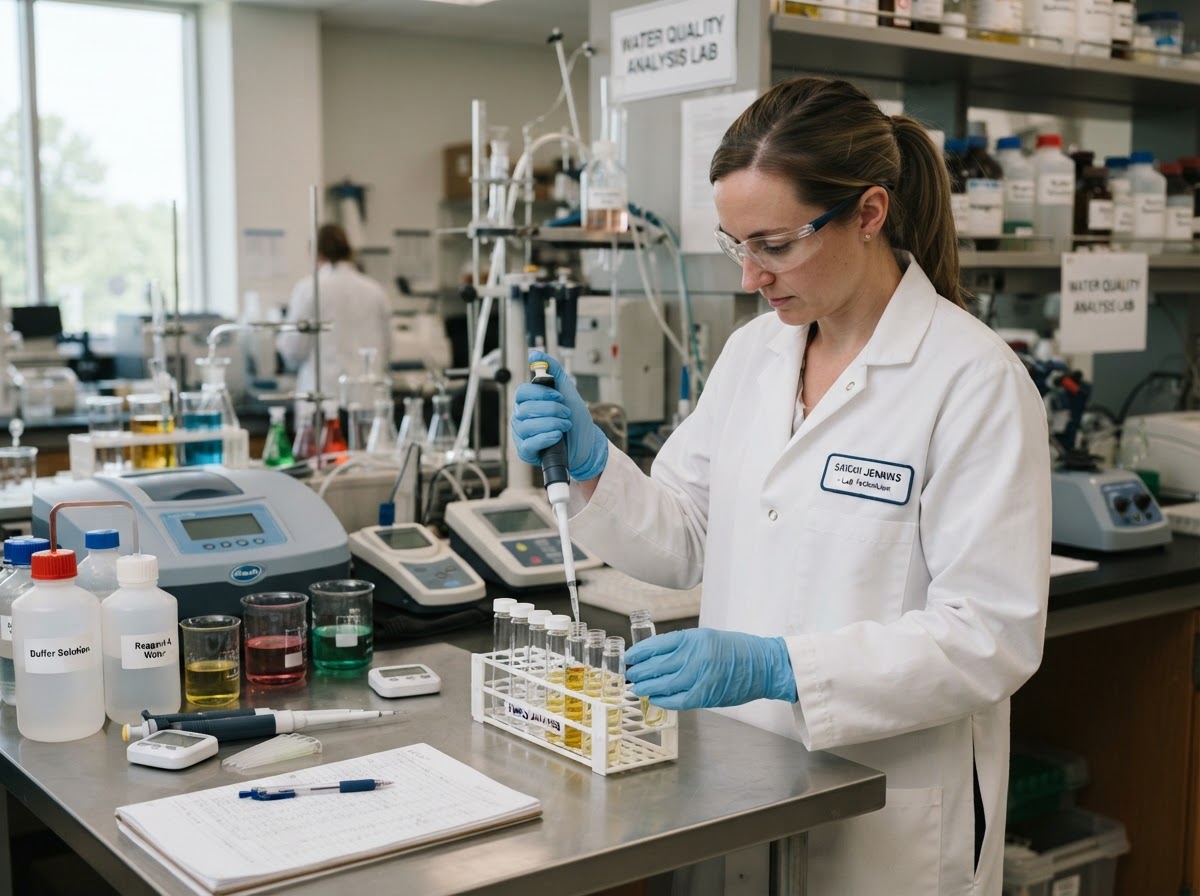
Silent Contamination
Water can look clear and still be unsafe
Contaminated water won't change taste or look until it's too late
Regular well water testing may not be mandated in Charlottesville, VA. However, if you skip it, your family may be drinking dangerous water. Contaminants from nearby septic systems, for instance, can build up to levels that will soon negatively affect your health. Unfortunately, contaminated water won't change its taste or look until it starts to cause serious health issues, so you could be drinking contaminated water for years without getting sick or noticing the side effects. Our annual well water testing in Charlottesville catches those changes before they become a health problem.
Charlottesville sits at the base of the Blue Ridge Mountains, and its geology shapes what ends up in your tap water. The bedrock around this area is made of granite, and as those rocks break down over time they release radon gas into the groundwater. That's why you may find radon contamination in your Charlottesville well, but it isn't the only contamination that affects your well water. A well water inspection in Charlottesville checks the well itself, not just the water, so you know how contamination is getting in.
With comprehensive well water testing, you'll know what's really inside the well water you've been using or drinking every day.
What should you test your well water for?
You should test your well water for total coliforms and nitrates. If the total coliform count is high, it's likely that harmful germs are also in your water. Coliforms are generally harmless, but if they can get in, germs that cause disease can too. It's ideal to test for E. coli or fecal coliforms, which can cause diarrhea, nausea, and cramps.
Another key chemical to test for is nitrate. High levels can make you sick, especially babies. Nitrates come from animal waste, flooded sewers, fertilizers, and decaying plants. If your well has high nitrates, other harmful chemicals or germs might also be present, so ask your health department if you should also test for lead, arsenic, radium, and other chemicals. For a deeper look at the bacteria side of that equation, see our bacteria and E. coli testing guide for Charlottesville.
Total coliforms
Signals a pathway for germs
E. coli / fecal coliforms
Diarrhea, nausea, cramps
Nitrate
Especially dangerous for babies
pH & total dissolved solids
Acidity, taste & appearance
Other water quality indicators to test for are pH and total dissolved solids (TDS). pH tells you how acidic or basic your water is and can affect your pipes, taste, and appearance. TDS tells you how much calcium, sodium, and other material is mixed into your water. For orange or black stains, our iron and manganese removal in Charlottesville covers the fix, and for hard water, our water softener guide for Charlottesville helps you decide.

Your Property
Know what every well draws up
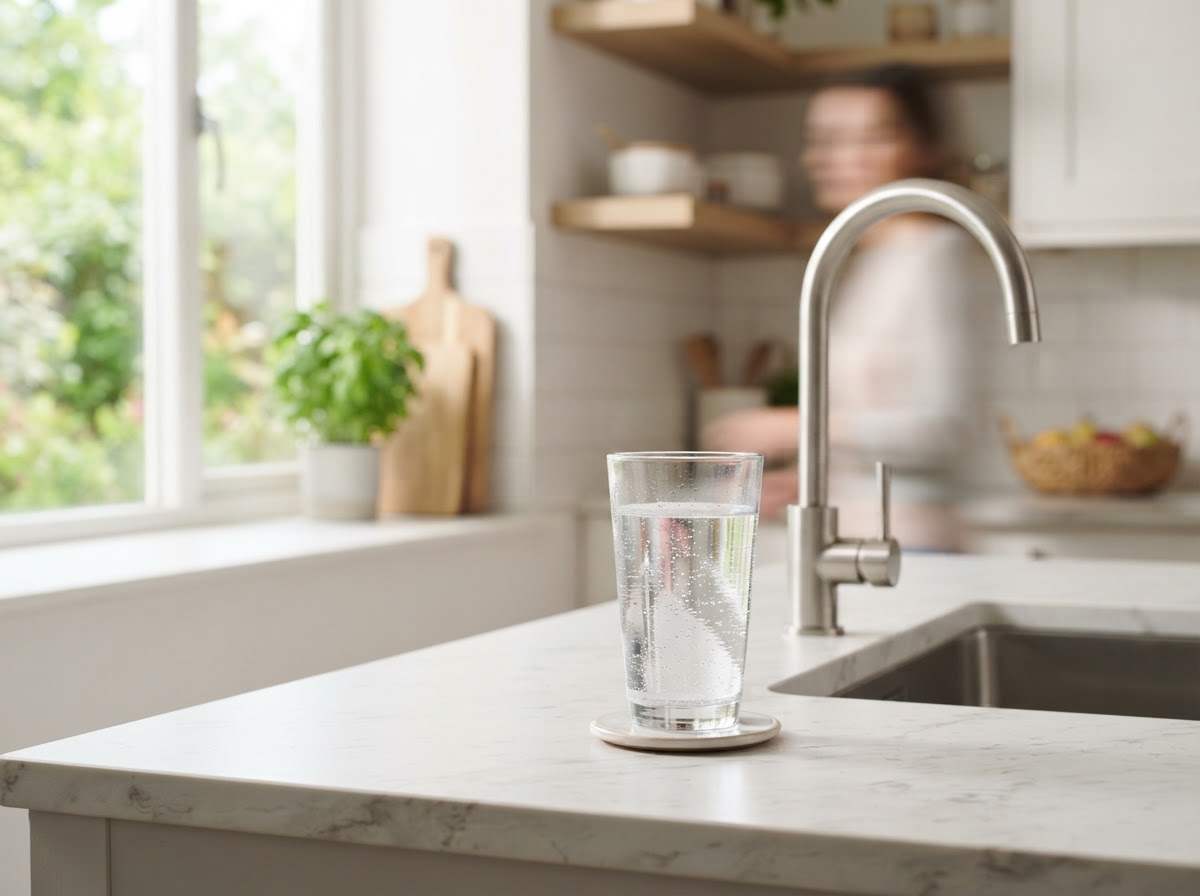
Yearly Minimum
Sooner after floods or repairs
How often should you test your well water?
You must test your well water every year to make sure there are no mechanical issues. The CDC recommends testing well water once a year for total coliform bacteria and nitrates. Total coliform bacteria is the standard test; E. coli is the follow-up that matters most. Nitrate is the other yearly test most people underestimate, it can't be detected by appearance, smell, or taste.
Every three to five years, you should test for pH, hardness, iron, and manganese to understand what your well water actually is. Lead and copper are also worth testing because they come from the plumbing, especially vital if your house is old. You may also test for arsenic.
Test immediately if the water has a new taste, smell, color, or is turbid; if floodwater reached the wellhead (don't drink it until it tests clean); after any well or plumbing work; or if there are water-quality problems reported near your well. When that happens, well water disinfection in Charlottesville is usually the next step.
How does well water testing work?
Five steps from choosing a certified lab to reading your results, done right so the numbers actually mean something.
1. Choose a certified lab
Choosing a lab or testing program is paramount, it's the only way to ensure the right results. Look for certification and accreditation. A certified lab follows strict protocols for accurate, verifiable water-quality results and a detailed analysis that can provide real solutions.
2. Obtain sample bottles
Get the sample bottles directly from the lab, don't use an old water bottle. The sample bottle is sterile, so never rinse it with tap water. Run the tap for several minutes before filling, without touching the inside.
3. Follow collection instructions
The certified lab will give you detailed instructions on how to collect a sample. Follow them properly, as it affects the results. Timing matters a lot when you're testing for bacteria.
4. Send the sample to the lab
There's a time window, usually 24 to 48 hours. Don't let the sample sit too long at room temperature. Store it according to the lab's instructions, or you'll get false positive or negative results.
5. Get the results
You'll receive results in four to five weeks depending on the program. A simple test may return in a few days; comprehensive testing takes a little longer.
Right parameters, right lab
The right lab and the right tests are what turn a water sample into an answer you can act on. Don't settle for a mail-order strip when certified analysis is available near Charlottesville.
What do your test results mean?
Results depend on the substances being tested. In most cases, a positive result isn't an emergency, but it requires action. If coliforms are present but there's no E. coli, it can mean a pathway exists with no fecal contamination. The usual course is to disinfect your well, but find the cause first.
If there are coliforms and E. coli, stop drinking the water. Use bottled water only until your well is retested, inspected, disinfected, and tested again. You shouldn't rely on your own knowledge, ask the lab or your local health department about next steps, and compare your results to EPA standards and Virginia health guidelines with someone who understands how to interpret them. If you're buying or selling, our real estate well water testing in Charlottesville keeps that transaction on schedule.
Remember: there's no one-size-fits-all approach to reading well water results. Work with someone who fully understands how the testing results should be interpreted.
Coliforms present, no E. coli
A pathway may exist without fecal contamination. Disinfect the well, but find and fix the cause first.
Coliforms and E. coli detected
Stop drinking the water. Use bottled water until the well is retested, inspected, disinfected, and tested clean again.
High nitrate
Especially dangerous for infants. Don't boil water to remove it, boiling can increase the concentration. Identify the source and treat accordingly.
Lead, copper, or arsenic flagged
Often tied to older plumbing or local geology. Compare against EPA and Virginia health guidelines and ask the lab what treatment the result calls for.
Where can you get well water tested near Charlottesville?
You can get your well water tested near Charlottesville through the Virginia Household Water Quality Program. It provides affordable, confidential water testing with trained local agents who help you interpret results and understand how to solve your water problems.
The program includes analysis for 28 chemical and bacteriological constituents, including nitrate, sulfate, iron, and other minerals. The analysis per kit is $70. You may contact its office to check availability. For private water testing labs, contact them directly for prices. Once your results come back, our well water filtration guide for Charlottesville helps you match the right system to what the lab found.
- Charlottesville, VA
- Crozet, VA
- Earlysville, VA
- Keswick, VA
- Ruckersville, VA
- Scottsville, VA
- Ivy, VA
- Free Union, VA
- Afton, VA
1 hr
avg. callback time
On-site
sterile collection
Certified
lab analysis
$70 / kit
program pricing
28 tests
per analysis kit
Plain-English
results reports
Common questions about well water testing in Charlottesville
Is a home test kit enough?+
A home water test kit is not enough to verify the quality of your well water. Home kits are only useful for a quick check of your water's pH, iron, and hardness. Only a certified lab can check bacteria, nitrates, arsenic, and other contaminants in your well water.
Should homebuyers test well water?+
If you're buying a home in Charlottesville, VA, with well water, make sure to order a comprehensive water test. It's part of the inspection process.
What should I do if the result is concerning?+
Don't panic if the results are concerning. Instead, contact your local health department. While waiting for the solution, stop drinking or cooking with the well water. Retest it to confirm, find the source of contamination, and fix it.
What contaminants are common in Charlottesville well water?+
The most common contaminants in Charlottesville well water include nitrates, radon, and sulfates.
What should I do if my well water test shows bacteria?+
Stop drinking the water. Use bottled water or install a UV purification system. Have it retested, fix the problem, and retest it to confirm bacteria are eliminated before you can drink from the tap again.
Is well water testing required in Charlottesville, VA?+
Well water testing in Charlottesville, VA, is required for newly constructed wells. After the initial construction, there's no law requiring private well owners to regularly test, but the EPA recommends testing at least once a year.
Ready to find out what's in your well water?
Get a free, no-obligation quote for well water testing in Charlottesville, VA. Certified results, honest guidance, and help interpreting every number on your report.