Basically, what we do with well water filtration is first we remove the dirt from the water, then we remove anything that would cause staining or scale or color in the water, then we disinfect your water to make sure that it's safe for your family.
So basically what happens is we start at the well, water goes from the well through the pressure tank. We're removing the dirt through the sediment filters here, and then we're going into any iron filters that we may need, water softener, tannin filter, again, depending on your water quality, ultraviolet disinfection system, and then it goes to the whole household water, or it can also go to a reverse osmosis system to give you super pure, great-tasting drinking water for your family.
1. The Pressure Tank
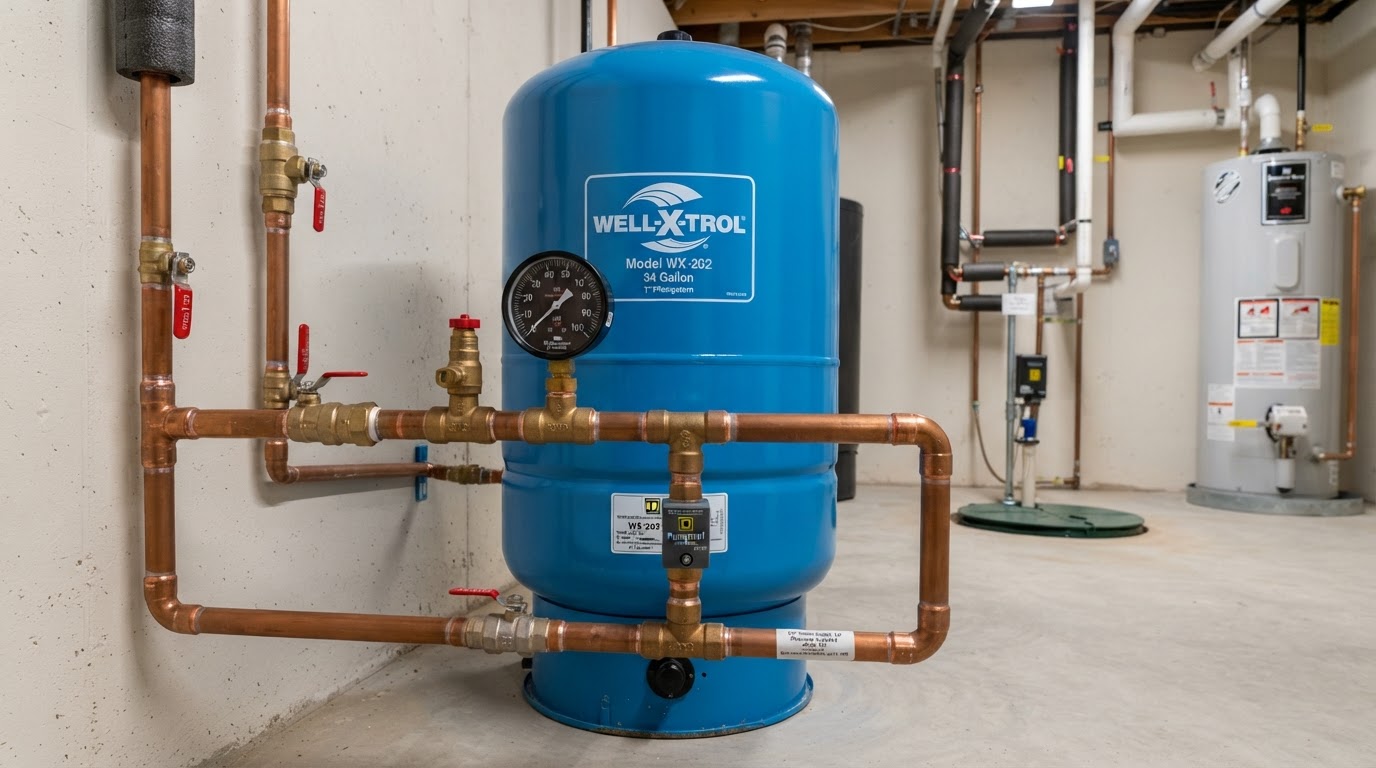
All right. Let's start at the beginning with the pressure tank. The pressure tank is a bladder tank, which means it has a bladder inside, and what happens is the pump comes on and it pumps up the water side of the pressure tank, and the other side of the pressure tank is air.
So as the water is being pumped into the tank, the air puts pressure against that water inside through the bladder, puts pressure onto that water, so that whenever you open a faucet in the house and you'll get a glass of water or something like that, the water comes from the pressure tank, it doesn't come from the pump.
Now, the reason you need that pressure tank is because if you didn't have it, every time you took just a small bit of water, the pump would have to come on, go off, come on, go off, and that would quickly burn out that pump.
2. Sediment Filtration
So the next step is sediment filtration, which basically means we're removing the dirt from the water. Now, there's a few different ways that we can do that.
Spin Down Filters
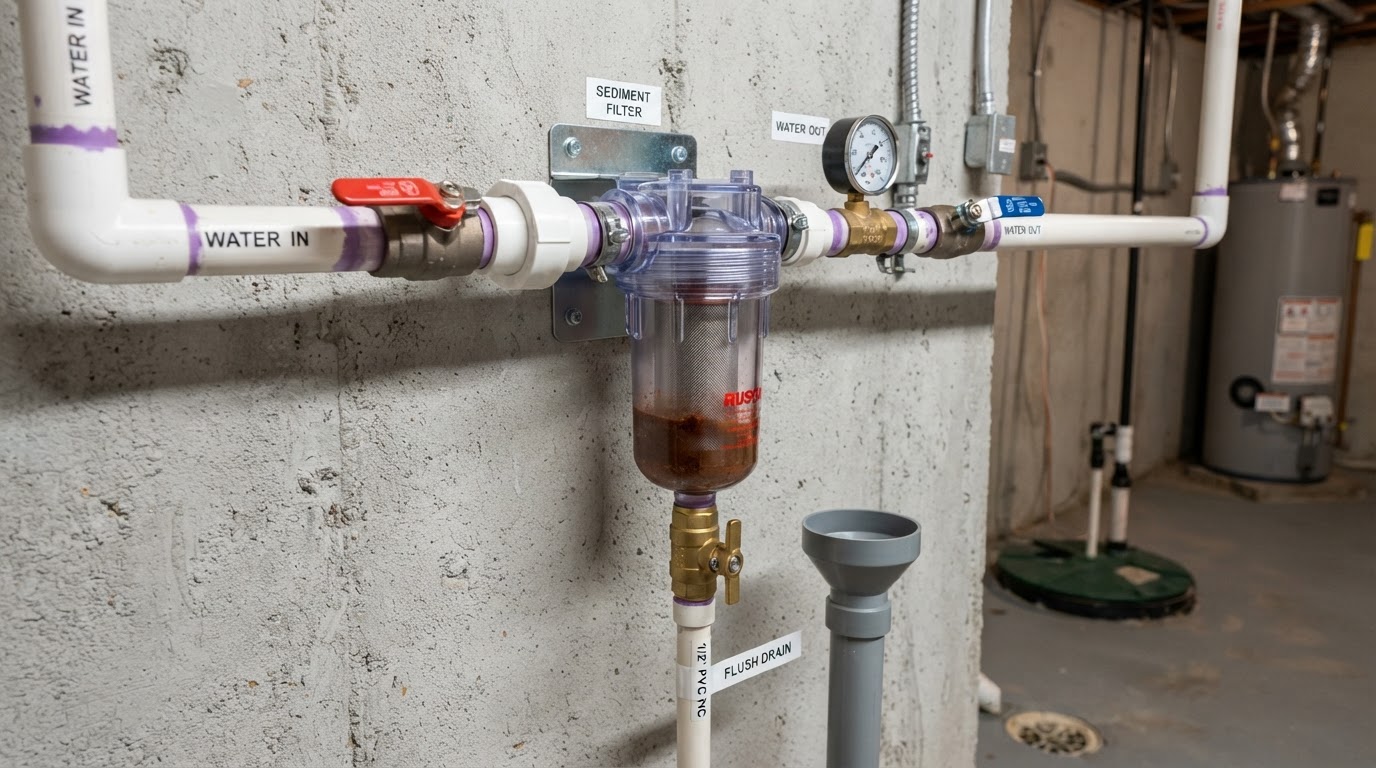
This is a spin down filter. Water enters through this side and then goes out through this side, and it gets filtered through this element inside here. So the dirt collects on that element.
Now, what happens is, after a period of time, after the filter becomes quite dirty and maybe slowing down your flow because it's clogged, that filter needs to be cleaned. And that's where the spin down name comes from.
Basically what happens is there's a valve that goes on the bottom here. You open up that valve, centrifugal force spins water inside here and flushes the debris from this filter and flushes it out the bottom.
Now, this is a very coarse filter. It definitely doesn't do fine filtration, but if you have a lot of dirt in your water, it's a great first filter.
Cartridge Filters
So another way of removing sediment from your water is with a cartridge type filter. So you would use a sediment filter. This is a polypropylene type filter, and you would put it inside a filter housing.
You can use different grades of sediment filters for this, different microns. So some are finer, some are coarser. So depending what you want to accomplish, you can change the type of filter you put inside here.
And sometimes you'll have two or three of these filter housings, and you'll have different kind of filters in there. So you might have a coarser filter and then a finer filter working along the water flow.
So with both of those types of sediment filters, you have to do the work. In other words, you have to replace the filter element in the cartridge type filter when it gets dirty and clogged, and the same with the spin down filter. You have to open up the valve at the bottom to flush that out periodically.
Automatic Backwashing Filters
So an automatic solution is to go with an automatic backwashing filter.
So the beauty of these systems is the dirt gets accumulated inside, and then every four or five days, they automatically backwash it, and it flushes all that dirt to the drain, which makes life easier for you because there's no filters to change, there's no chemicals involved. It just does it all automatically.
Related reading: well water filtration in Charlottesville
3. Iron and Sulfur Filters
Now, if you have iron and/or sulfur in your water, you're going to need chemical-free iron and sulfur filters.
So how these systems work is they oxidize the iron and the sulfur out of the water as it passes down through the tank, and then it backwashes it to the drain automatically. Again, no chemicals to add, no filters to change. It just does it all on its own.
Related reading: iron and manganese removal in Charlottesville
4. Water Softeners
Water softeners do more than just soften your water. They also remove iron and manganese from your water.
So if you have iron in your water, less than one part per million, and no sulfur in your water, you don't need an iron and sulfur filter. You can just go with a water softener.
Same with manganese. If you have manganese in your water, a water softener will get rid of it for your family.
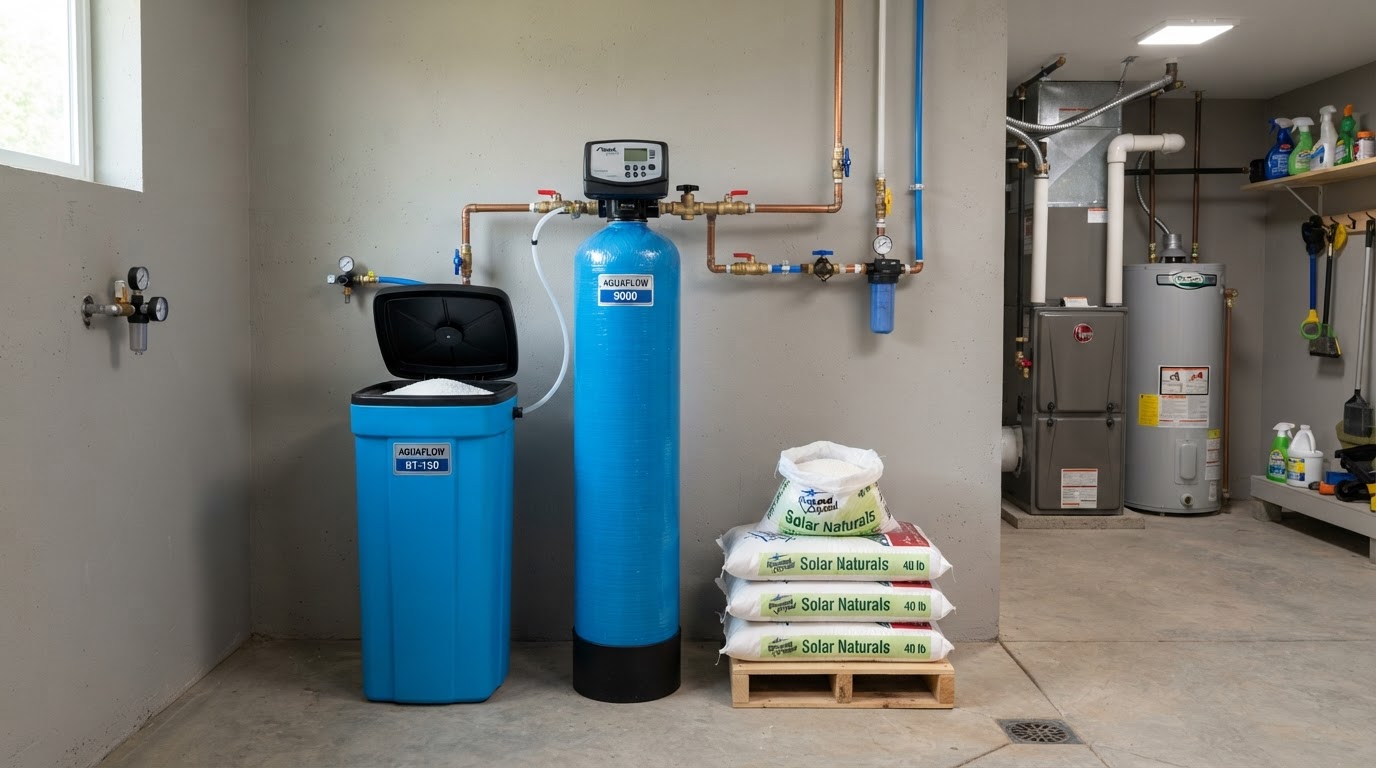
Now, you may have heard that water softeners use salt to make brine to regenerate or to clean out the water softener. So ongoing maintenance for a water softener involves adding bags of water softener salt to that water softener.
How many bags are you going to go through? Well, it really depends on a lot of different parameters.
Fully Metered Water Softeners
So what that means is the more water you use, the more salt they'll use, but the less water you use, the less salt they'll use. The amount of salt you use is totally based on your family's water usage.
Related reading: water softeners for well water in Charlottesville
5. Tannin Filters
So if your water's brown or has a weak tea color, it's important to have your water tested to find out if that's coming from either tannins or iron.
So as I mentioned earlier, if you have an iron filter, it's going to remove the iron, and if the color's being caused by that iron, all the color will be gone.
But if the color's being caused by tannins, you need a tannin filter.
It looks exactly like a water softener, and that's because externally, they are. They are exactly like a water softener. The only difference between a tannin filter and a water softener is what's inside, the media that's inside. It's a special media that looks after tannins.
And another thing you'll notice in the usage of a tannin filter is generally they use a lot more salt than a water softener does.
And by the way, what are tannins anyway? Well, tannins are a coloration in a liquid, in this case water, that's being caused by an organic. So what happens is when organics break down, they tint the water. So you may be more familiar with tannins in terms of tea or wine.
6. Ultraviolet Disinfection
So we've removed the dirt, we've gotten rid of everything that's going to cause any staining or any smell or any discoloration or buildup in your home, cottage, or cabin. The next step is to make the water safe for your family, bacteria-free.
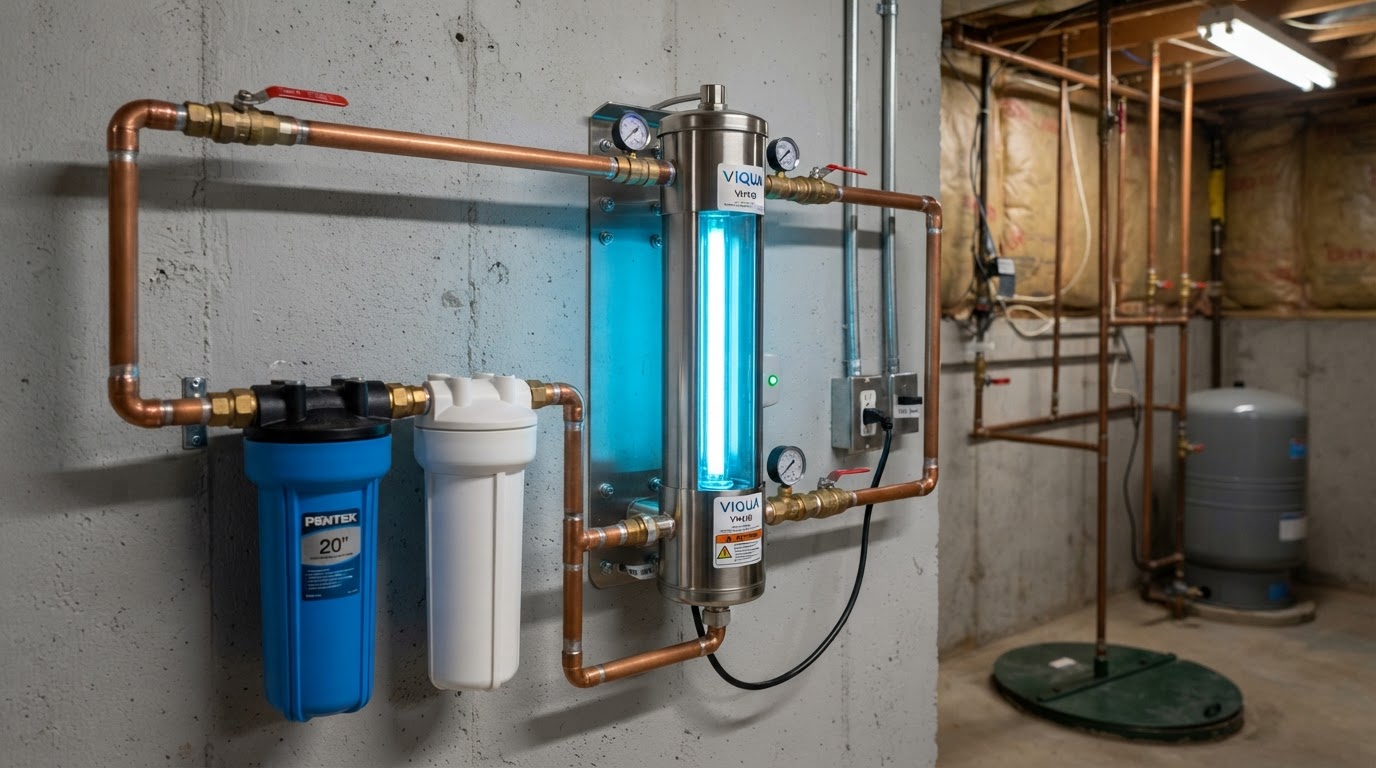
For that, we use an ultraviolet disinfection system, and basically how it works is water flows through a sediment filter.
This is a very fine sediment filter, so you need to make sure that you've done the heavy lifting already when it comes to removing the sediment, and the water flows through the sediment filter first, carbon filter second.
So the carbon filter removes chemicals from your water, herbicides, pesticides, that kind of thing. And then the last stage is the ultraviolet light.
Water would flow over that ultraviolet light. Again, we've gotten rid of the color, we've gotten rid of anything that's going to cause staining inside that ultraviolet light, and will kill the bacteria and then goes on to your home, cottage, or cabin, the whole place.
So we've taken care of all the utility water in your home, cottage, or cabin. It's potable, it's safe to drink, it's good to go.
Related reading: well water disinfection in Charlottesville
7. Reverse Osmosis Drinking Water Systems
Are we done? Not necessarily. If you want great tasting drinking water, you would add a reverse osmosis drinking water system.
So basically what this does, it takes water and it forces water through a membrane, a very, very dense filter, and the good, low mineral content water goes through that membrane, gets stored in a tank, and then comes out a faucet at the kitchen sink, and it's also connected up to your fridge if you have a fridge with a water dispenser and ice cube maker inside. The high mineral content water goes to the drain.
So if you've got high amounts of sodium in your water, and again, you need to have your water tested to find that out or not, if you have that or not, or if you just don't like the taste of the water, then a reverse osmosis drinking water system is a great way to go.
Also, if you have anyone in the family that would be a little bit squeamish about drinking well water, even after the ultraviolet disinfection system, the reverse osmosis system also gives you a second barrier against bacteria.
Choosing the Components You Need
Now again, you wouldn't need all of these. It depends on your circumstances.
You've got a lot of dirt, then you're better off with the automatic backwashing filter. If you've just got a small amount of dirt, then you're better off with the cartridge type sediment filter.
And if you've got a lot of dirt, but you don't mind opening up that valve periodically, the spin down filter, and budget wise, it's a lot friendlier on the budget, the spin down filter.
Next up, we have the water softener, and again, depends on how soft your water is or how hard your water is, if you need that or not. Same with the tannin filter. No brown water, you won't need a tannin filter.
Related reading: well water testing in Charlottesville